
Bible Journaling for Beginners
There are times when prayer feels easy and times when words lodge somewhere between the heart and the mouth. Bible journaling for beginners was born in that in-between space.
It’s not for people who have pretty handwriting and know all the right verses, it’s a slow, intentional way to sit with God’s Word instead of rushing past it. A way to process what you’re reading when life is messy, faith feels complicated, or emotions don’t come with neat explanations.
If you’ve ever opened your Bible and thought to yourself, “I’m not sure where to begin.” Or perhaps you’ve desired a deeper, more intimate relationship with Scripture, Bible journaling for beginners offers a gentle entry point into deeper reflection you’ve been waiting for.
What Is Bible Journaling?
Bible journaling (often called scripture journaling) is the practice of engaging with Scripture through writing, reflection, and creativity. Ultimately, Bible journaling is a conversation between you and God that is led by the Bible.
For some, this might mean journaling their own prayers or scribbling their thoughts alongside a scripture from the Bible. For other people, this could mean making their scripture stand out with highlights, jotting notes in the margins (margin journaling), or even illustrating keywords that catch their attention. There isn’t a “right” method.
Bible journaling differs from regular journaling because it begins with the Scripture. Rather than beginning with your own thoughts, you begin with God’s Word and then engage your thoughts and experiences there.
Read about other journaling techniques here.
Why Bible Journaling Matters
One of the biggest benefits of Bible journaling is that it helps you slow down. Many people begin Bible journaling during a time when it’s hard to stick with reading the Bible. They read the Bible, close the Bible, and minutes later, the reading feels like a distant memory. The intention is there, but the connection doesn’t always last.
Journaling encourages you to stop and sit with a verse long enough for it to sink in, as opposed to quickly reading Scripture. The physical act of putting words down allows you to take in the details you might not have caught otherwise and to ponder what the Word of God is communicating to you personally.
Bible journaling also helps process emotions honestly. When you write, you’re more likely to acknowledge what you’re really feeling rather than what you think you should feel. This becomes liberating to those who are still trying Bible journaling.
Another benefit many people notice is spiritual harmony. You may find that journaling gives you a rhythm. Even a brief entry will allow you to get back to the Bible regularly, so that Bible study will feel less overwhelming. Over time, those small moments add up.
Bible journaling also strengthens your relationship with God. Reading turns into a conversation and is no longer a to-do list. When you go through old Bible journal pages, you may see patterns of answered prayers and personal growth, as well as times when God responded to you without you realising it.
Benefits of Bible Journaling
1. Improved Memory Retention
Bible journaling opens up the world of Scripture in ways that affect not just the mind, but the heart as well. Perhaps one of the greatest advantages of Bible journaling is improved memory retention. By taking the time to copy out Bible verses, to summarize their meaning, or simply to think about their implications, you memorize the verses much more easily. The physical process of putting your thoughts onto paper slows your mind down, and the Scripture that was previously difficult to memorize feels almost familiar.
2. Deepens Understanding
Bible journaling also helps deepen understanding. When you dedicate time to sitting with Scripture and writing about it in your Bible journal, it encourages you to ask questions, notice themes, and connect Scripture to your own life. This kind of engagement makes the Bible feel less distant and more relevant, especially for beginners who may feel overwhelmed by where to start.
3. Emotional and Spiritual Processing
Another great benefit is emotional and spiritual processing. Journaling creates a safe space to work through doubts, fears, gratitude, and unanswered prayers. Writing things out often brings clarity and peace, helping you recognise God’s presence even in uncertain times.
4. A Meaningful Family Heirloom
Bible journaling can also become a meaningful family heirloom. As the years go by, your journals are filled with much more than just scribbled reminders. They are filled with prayers, seasons of life, struggles, and triumphs of faith. These pages can one day be passed down, offering future generations a glimpse into how God worked in your life. There’s something deeply comforting about knowing your story of faith is not lost; it’s written, remembered, and shared.
5. Spiritual Consistency
Lastly, a Bible journaling habit results in spiritual consistency. It is a gentle reminder to spend time with Scripture regularly, and this is accomplished with a desire and not an obligation. The more personal the practice becomes, the easier it is to keep showing up.
Bible Journaling Ideas and Methods to Try
Bible journaling doesn’t follow a single format. One of the most beautiful things about it is that one has the freedom to try things out to see what might work. Some methods lean more reflective, others more creative, and many fall somewhere in between. All Bible journaling ideas are found below.
1. Traditional Bible Journaling
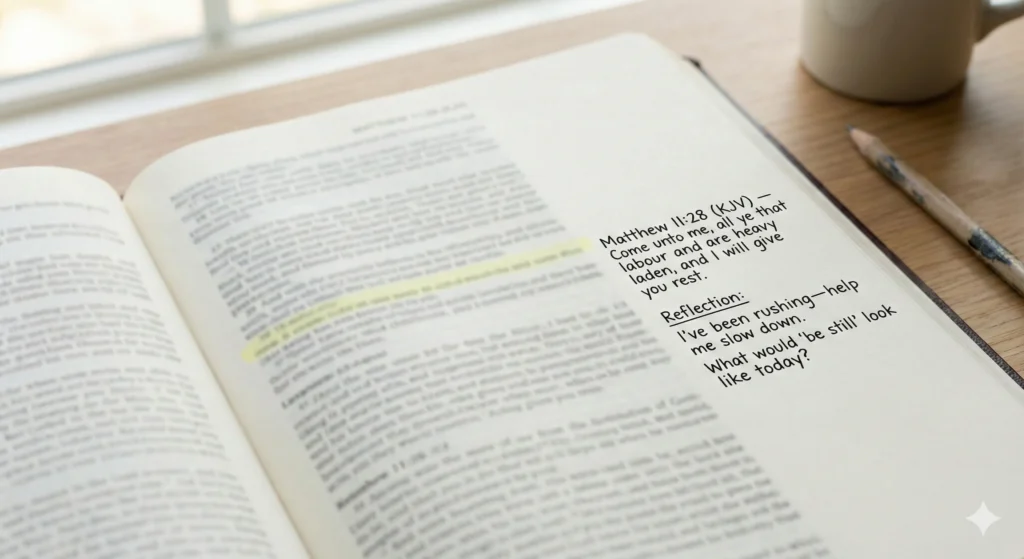
Traditional Bible journaling focuses on writing and reflection. This method usually involves reading a passage of Scripture and journaling thoughts, prayers, or insights in a notebook or alongside the Bible text.
This style works well for those who prefer structure and simplicity. It may include:
- Writing verse reflections
- Journaling prayers inspired by Scripture
- Recording questions or key themes
- Noting how a passage connects to daily life
Traditional journaling is especially helpful for beginners because it requires very little preparation. A Bible and a pen are enough to begin.
2. Artistic Bible Journaling
Artistic Bible journaling incorporates creativity as a form of worship and reflection. This method allows Scripture to be expressed through visual elements such as drawing, lettering, color, or collage.
Artistic journaling might include:
- Illustrated verses
- Hand lettering keywords or phrases
- Colour-coding themes
- Using stickers, washi tape, or paint
This approach is not about artistic skill. It’s about expression. Many people find that engaging the hands helps quiet the mind and opens space for deeper reflection on God’s Word.

3. Verse Mapping
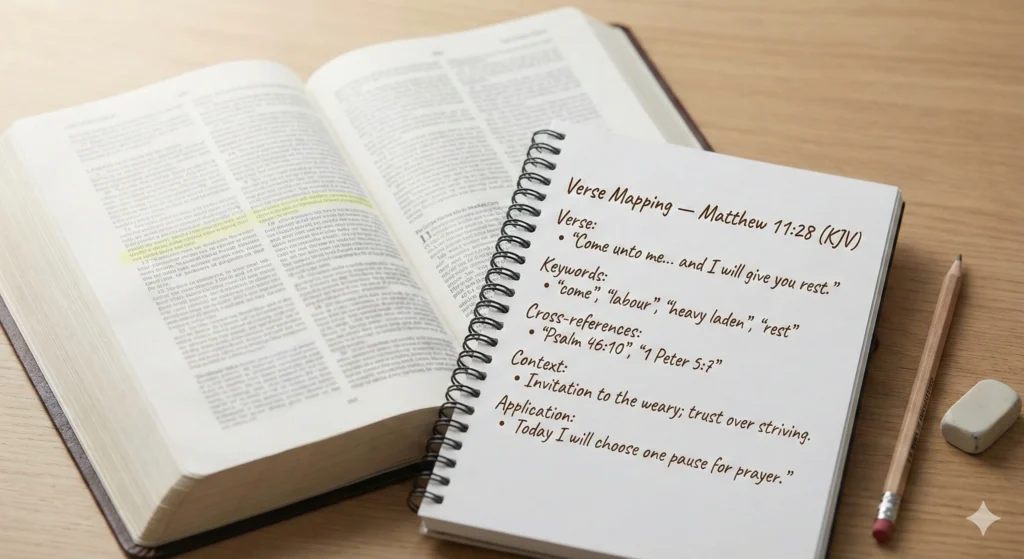
Verse mapping is a more in-depth, study-focused method of Bible journaling. It’s one of the most practical bible study journaling methods because it breaks down a single verse (or short passage) to explore meaning more fully.
Verse mapping often includes:
- Writing the verse in full
- Defining key words
- Noting cross-references
- Exploring historical or cultural context
- Recording personal application
This method is ideal for those who enjoy studying Scripture deeply and want to understand not just what a verse says, but what it means and how it applies today.
How to do verse mapping (step-by-step):
- Choose one verse (or a short passage) to focus on.
- Write the verse in full, slowly, and notice what stands out.
- Circle key words and define them in your own words.
- Note cross-references and repeated themes you keep seeing.
- Add brief historical or cultural context if it helps understanding.
- Write one personal application and one simple next step today.
Mixing Methods
Many people naturally blend these methods. A single journal might include traditional reflections, artistic elements, and occasional verse mapping pages. Bible journaling is meant to be flexible, evolving with faith, season, and need.
There is no “best” method, only the one that helps Scripture come alive in a personal and meaningful way.
Bible Journaling Supplies
This doesn’t have to get complicated, but the right basics can make the practice smoother—especially if you’re working with thin Bible paper. These are simple, neutral guidelines for bible journaling supplies for beginners.
No-bleed pens for Bible journaling (what to look for)
Look for pens that are fine-tip, quick-drying, and low-bleed. Test on a back page first, and write lightly to reduce ghosting. If you see heavy bleed-through, switch to a lighter ink or a softer touch.
Best highlighters for thin Bible paper (what to avoid)
For thin Bible paper, avoid wet, juicy highlighters that saturate the page. Choose gentle, lighter coverage options and let them dry before closing the Bible. Always test first—some pages handle color better than others.
Journaling Bibles with wide margins (who they’re for)
Journaling bibles with wide margins are great if you love margin journaling and want room for notes, prompts, and simple creative touches. They’re especially helpful for beginners who want to keep reflections close to the text without feeling cramped.
How to Start Bible Journaling for Beginners
You don’t have to possess special skills, buy a lot of expensive supplies, or plan out a routine perfectly to start Bible journaling. Beginners should feel welcome to start slow, honest, and pressure-free.
Start With a Simple Passage
Choosing where to start can feel overwhelming. Beginners often find it helpful to begin with a short passage, a psalm, a proverb, or even a well-known verse from the Gospels. Reading a small section allows more space for reflection without feeling rushed.
Read, Then Pause
Before writing anything, take a moment to pause. Read the text before you, maybe a quick pass or two. Notice which words or phrases stand out. Sometimes it’s a comforting line, other times a question or tension within the text. This pause creates a space for reflection and sets the tone for journaling with intention rather than urgency.
Write Honestly, Not Perfectly
Bible journaling for beginners works best when they put honesty before perfection. Writing can include thoughts, prayers, questions, or even confusion. There’s no need to sound spiritual or have clear answers.
Some beginner-friendly prompts include:
- What stands out in this passage?
- What does this verse reveal about God?
- How does this connect to life right now?
- What prayer naturally flows from this?
Short entries are enough. A few sentences can be just as meaningful as a full page.
Choose a Method That Feels Comfortable
Beginners don’t need to try every Bible journaling method when they first start. Starting with traditional journaling is often the easiest. Over time, artistic elements or verse mapping can be added naturally. The approach is far less important than the consistency and transparency that must be shown on the page.
Keep the Practice Flexible
The beauty about Bible journaling is that it doesn’t have to take place on a daily schedule. There may be days that entail complete reflection, while others might only include a highlighted verse or a single line written down.
Flexibility helps remove pressure and makes the practice sustainable, even during busy or stressful periods.
Trust the Process
Like any spiritual practice, it takes time to see growth in Bible journaling as well. Early entries may feel awkward or unsure, and that’s part of the journey. With each page, reflection deepens, familiarity with Scripture grows, and journaling begins to feel more natural.
Bible Journaling Prompts: Questions to Ponder and Reflect
Sometimes the hardest part might be figuring out what to write. Having reflection questions means having a soft-landing spot to start with, helping Scripture move from reading into understanding. These bible journaling prompts and scripture reflection questions are especially helpful for beginners, but they remain meaningful at any stage of faith.
Prompts for Understanding Scripture
These questions help slow down reading and deepen comprehension:
- What words or phrases stand out in this passage?
- What is happening in this Scripture, and who is speaking?
- What does this passage reveal about God’s character?
- Are there repeated themes or ideas?
- What might this passage have meant to its original audience?
Prompts for Personal Reflection
These prompts invite Scripture to connect with everyday life:
- Why does this verse feel significant right now?
- What emotions does this passage bring up?
- Where does this Scripture feel comforting, challenging, or unclear?
- How does this passage relate to a current situation or season?
- What truth is difficult to accept here?
Prompts for Prayer and Response
These questions help turn reflection into conversation with God:
- What prayer naturally flows from this passage?
- What is being asked, promised, or revealed?
- Is there something to release, surrender, or trust?
- What gratitude does this Scripture bring to mind?
- What hope does this passage offer?
Prompts for Growth and Application
These prompts focus on gentle, practical response:
- How might this Scripture shape thoughts or actions today?
- What is one small way to live out this passage?
- What needs patience, obedience, or faith?
- What reminder from this passage may be needed later?
- How does this verse invite growth rather than perfection?
There is no need to answer every question. Even one prompt can open space for meaningful reflection. These prompts can be printed and cut into cards, taped inside a journal, or used as a weekly guide. Keeping them visible makes it easy to return to reflection whenever time allows, turning journaling into a meaningful routine.